On Structure
In this season of photography, I’ve been studying texture along with other characteristics that can be found in visually appealing images. Over people and places, I wanted to focus on how these micro elements play a pivotal role in shaping the narrative of a photographic series.
With many intriguing features, an artichoke still life photography study seemed a natural place to begin.
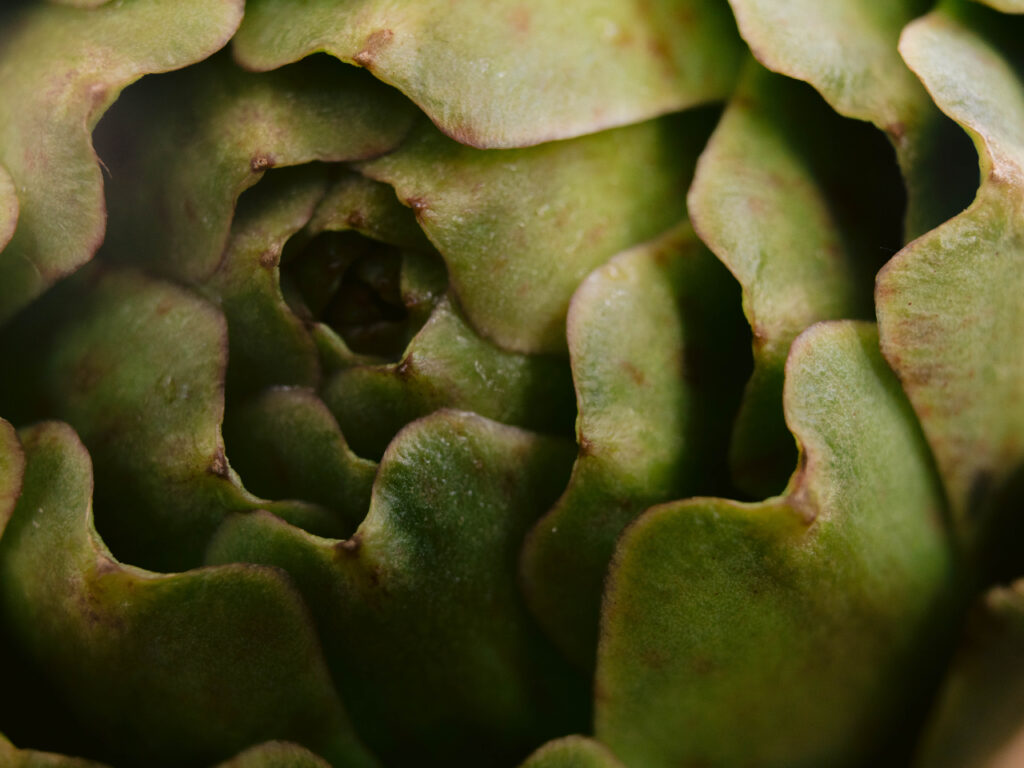
Layered upon each other, its leaves add dimension and a repetitive pattern to the flower. Through these layers, the eye can see pockets of shadows varying in levels of darkness. Its matte green color creates a soft looking surface, which is deceiving considering some artichokes have thorns.
On Light and Surface
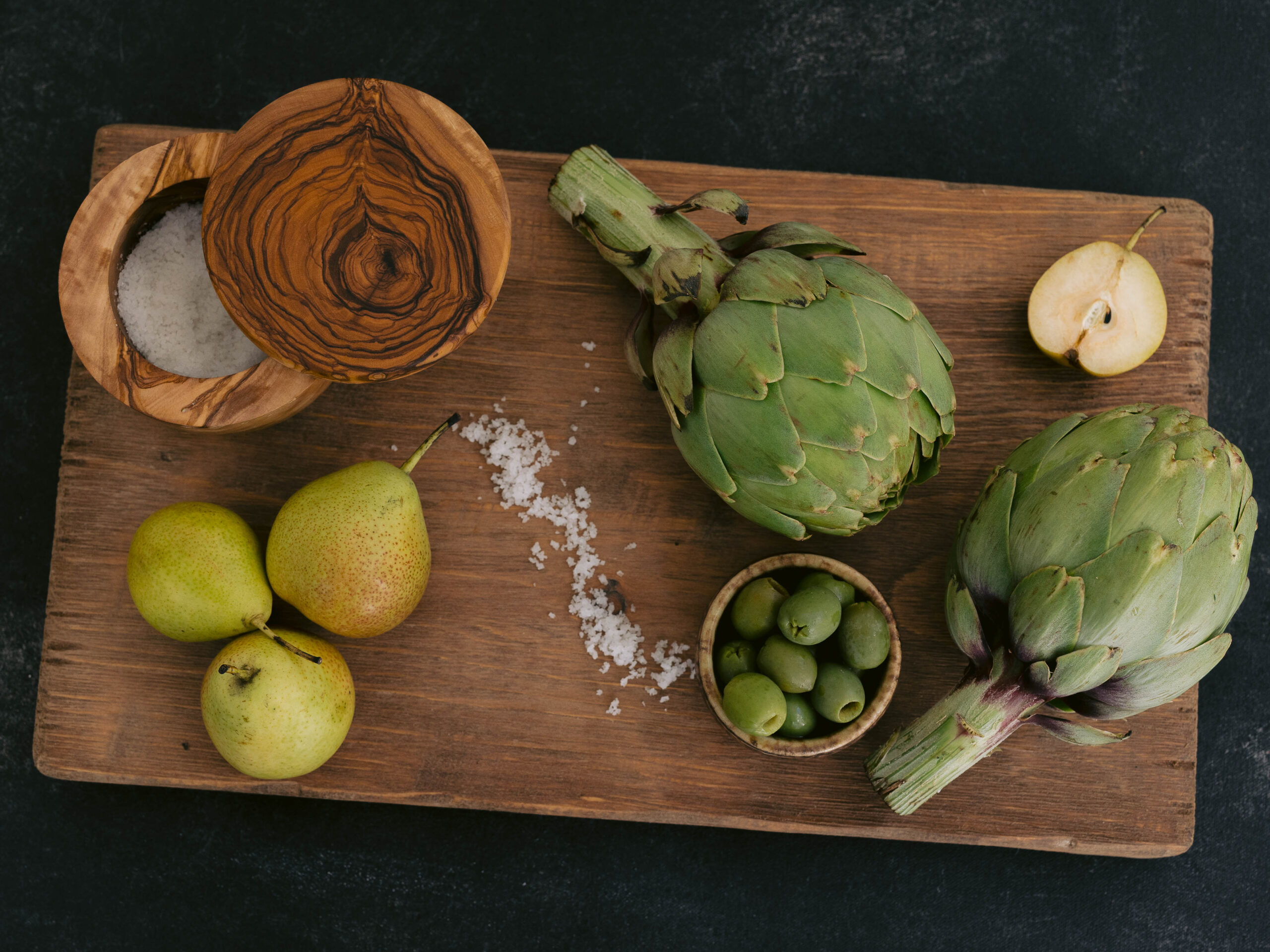
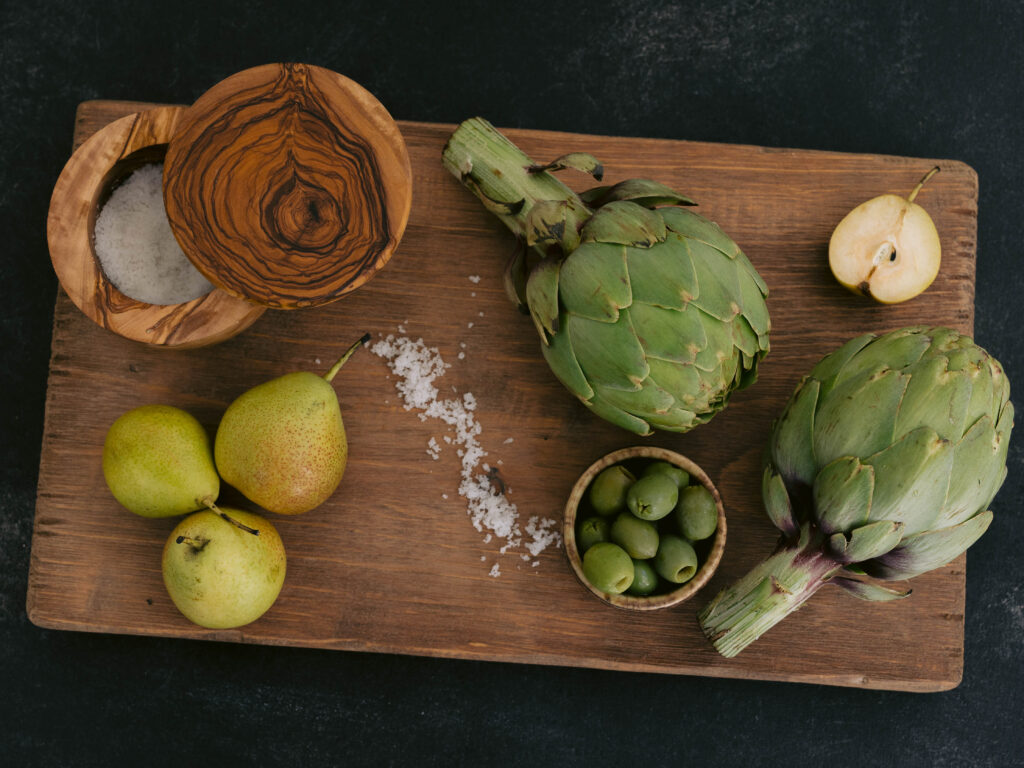
During mid morning on a covered patio, sunlight shone through quite harshly. However, the backdrop used for the photos clipped out the sun enough to create a natural look. I started to design a flatlay on a textured charcoal-colored mat, adding drama and maturity – characteristic of spreads that would fit beautifully in a culinary book.
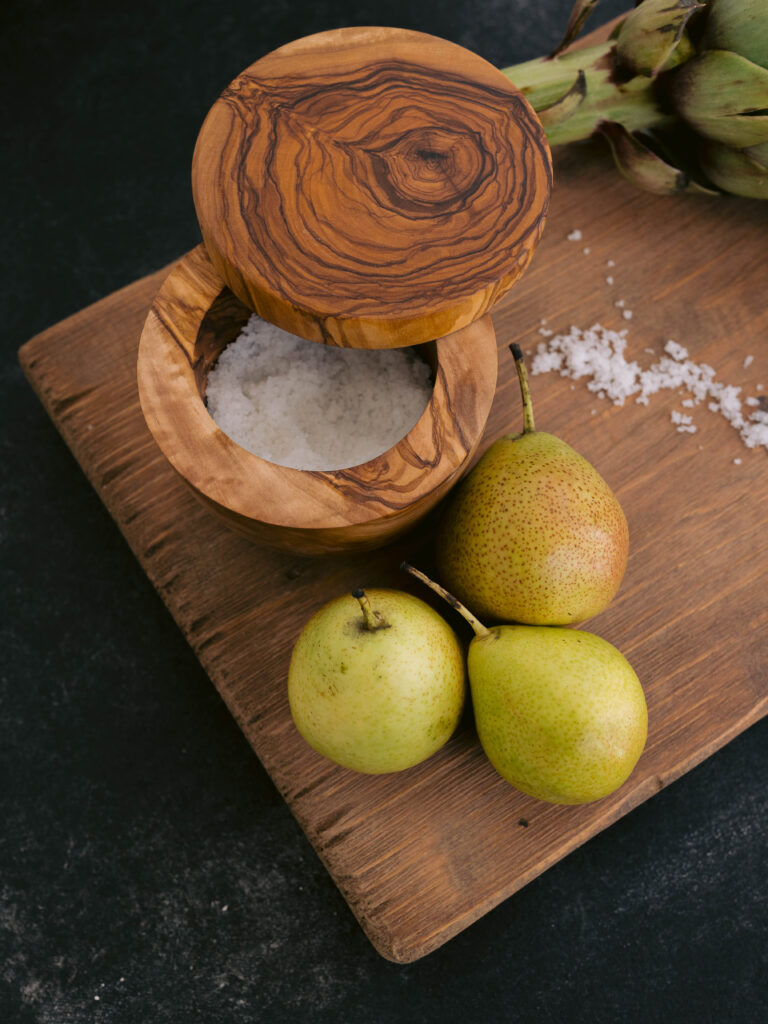
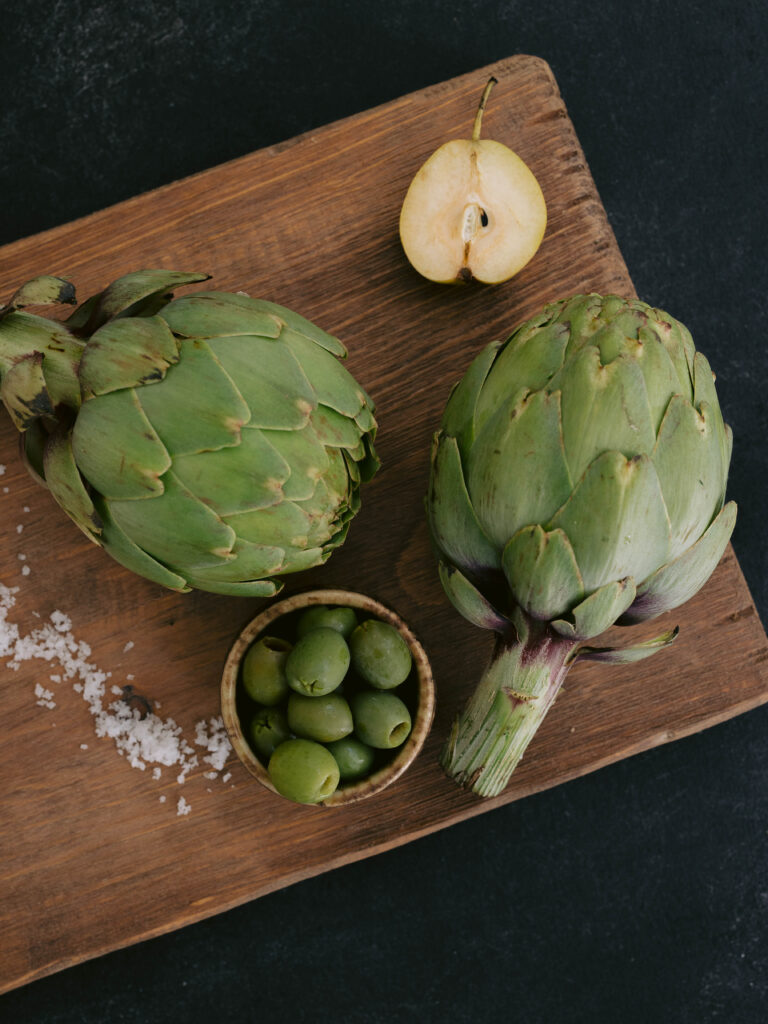
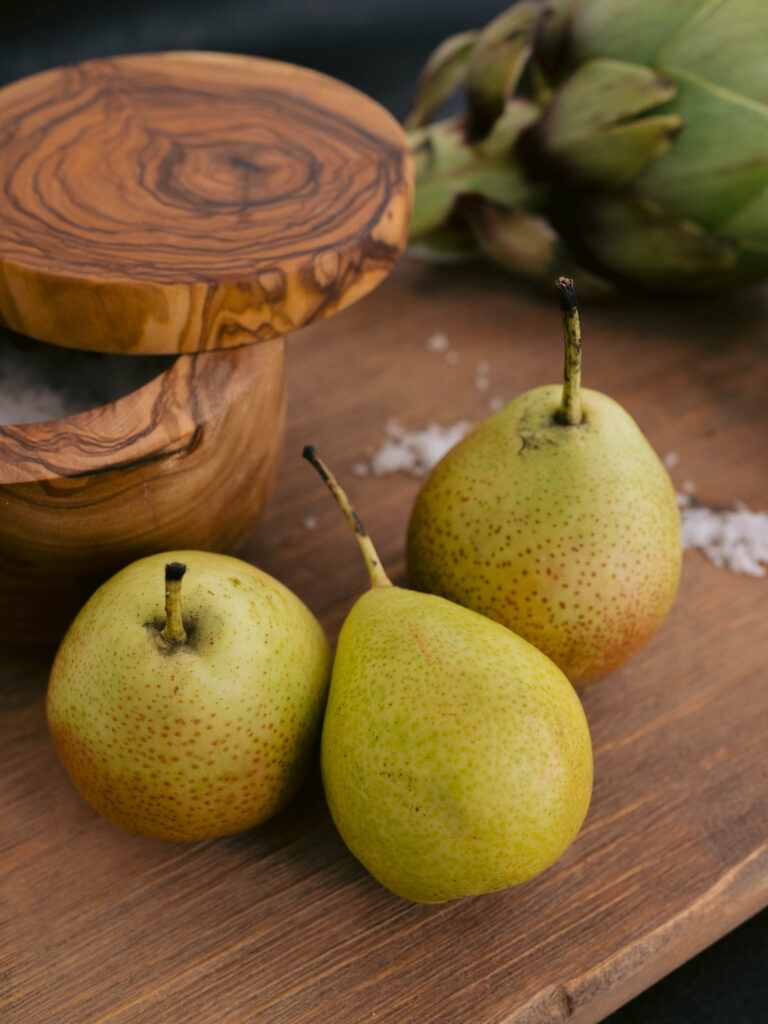
It was important to add contrast to further celebrate the colors, textures, and dimensions of the various flatlay elements. To do so, I used a wooden tray onto the mat. From there, the artichokes along with pears, natural grain salt, and olives were moved around strategically.
Once the design was visually appealing, photographing began.
Purposefully using different angles and lenses, I studied the dominating features revealed in each frame. For example, I first wanted to set the scene for viewers by capturing the entire flatlay with a 35mm lens from above. The rustic and rough texture of the wooden tray grounded the image while also emphasizing the smooth texture in the pears and olives, the dimension in the artichokes, and the grittiness of the salt.
I then tested how using a macro lens would change my perspective.
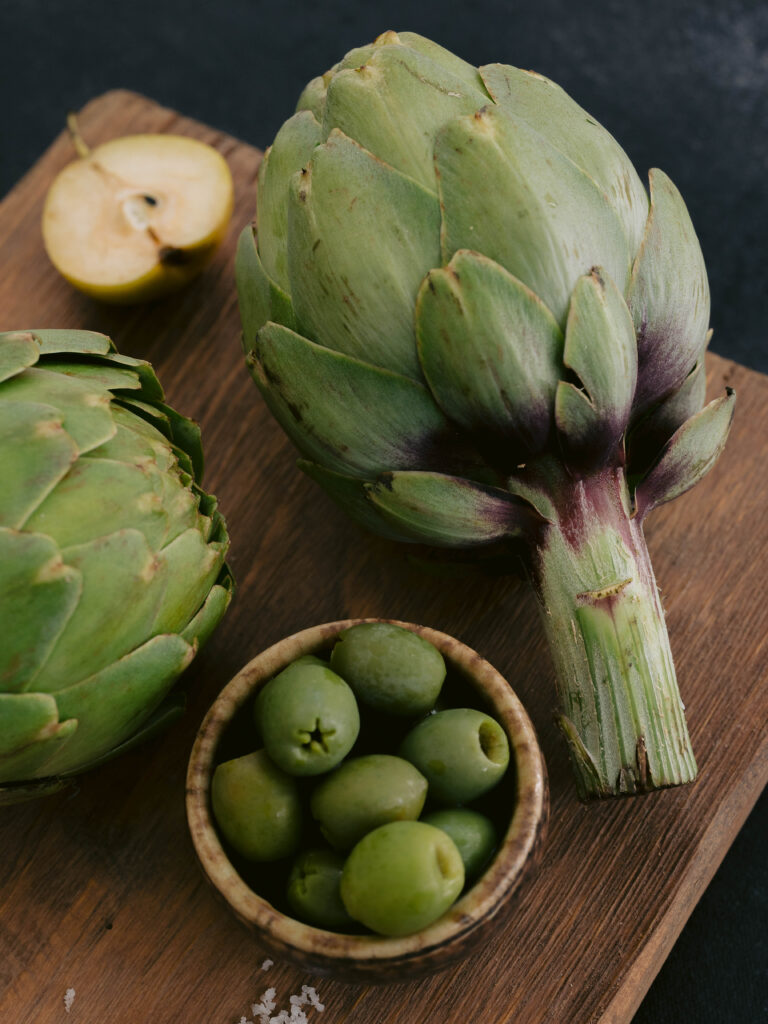
With that, I immediately noticed the juxtaposition of softness and sturdiness within the elements of the artichoke. While the body of each leaf was smooth, the top had a brown crest, rough in texture and reminiscent of the nub on a banana. I also more easily noticed the appearance of a color gradient, composed of blue-green, lime green, and hints of yellow – the signature color that makes this flower so wonderful to look at.
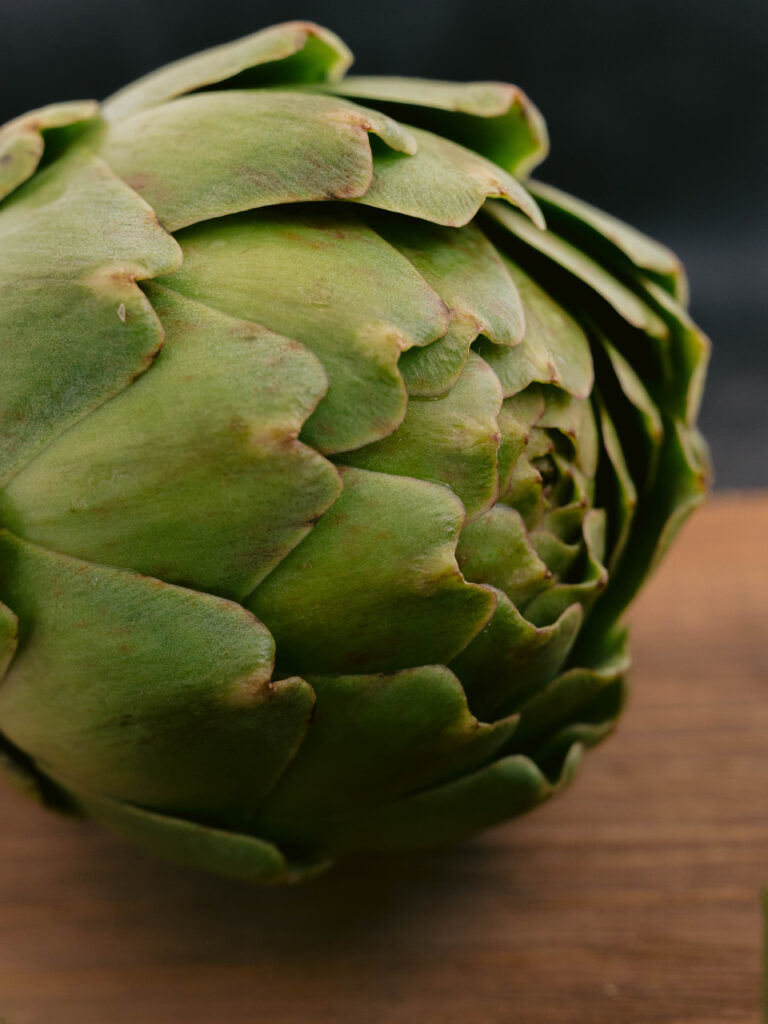
Using a different angle, the light was intentionally placed behind the subject. Unlike sidelight, this variation gave the flower a more evenly lit, brighter look. There was a loss of contrast, but due to the artichoke’s infrastructure, shadows still varied between the leaf’s layers. Overall, this frame had a softer, more feminine feel.
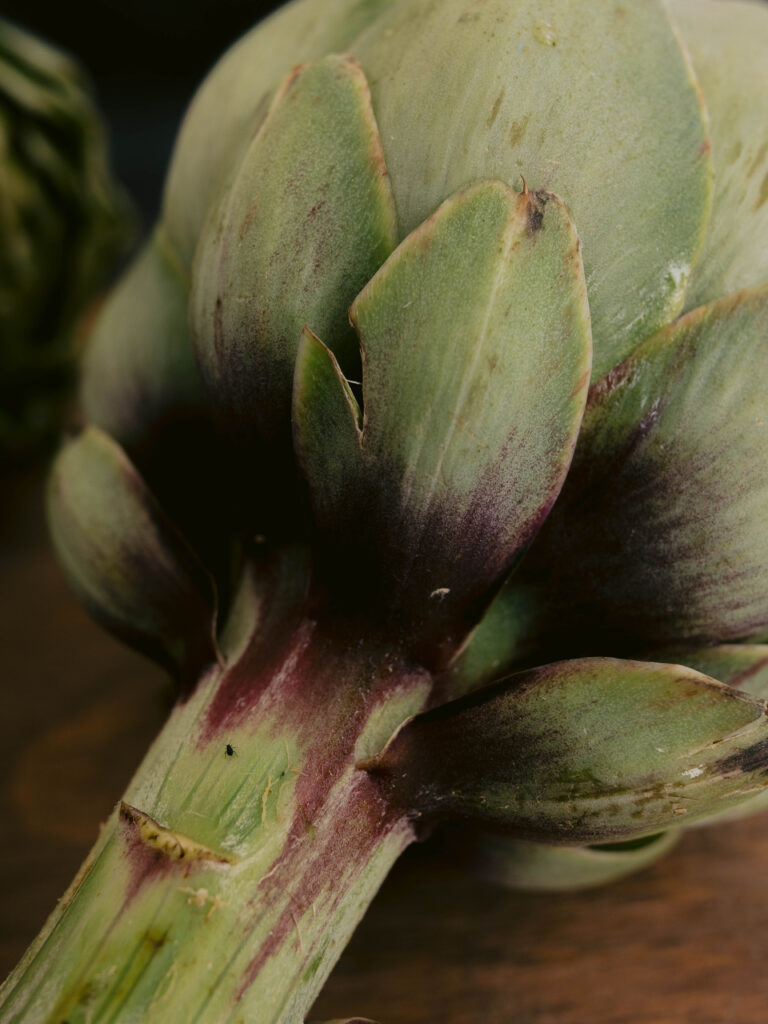
Lastly, let’s discuss the general design of an artichoke. Their leaves not only give them a plethora of dimension and shadows, but a visual rhythm. Stacked in layers one on top of another, they create a dome shape, forcing the eye to look from the bottom of the stem to the top, over and over again. This pattern continues on into the core of the artichoke, alluding to a protective layer where its heart lies.
What This Study Changed
This study was a revelation of beauty. Namely, that it is architectural in nature – built layer by layer, full of depth, and relying entirely on a sound structure.
The same can be said when I photograph women, interiors, or artists immersed in their craft. Each subject has its own rhythmic pattern – some are more bold, others hide in the shadows, but all are composed of layers unique to them.
On Restraint
Post-production was about enhancing the beauty already captured using sculpted light and intentional composition. I paid closest attention to the white balance due to the complex nature of the colors in the artichoke. It was important they were preserved in their natural state.
Instead of lifting the shadows aggressively or adding contrast, I focused on preserving tonal separation. Each layer needed to shine on its own.
Over-brightening the images would have made them flat and dull and darkening them would have created an overdone look that I don’t typically use.
The final images are a reflection of artistic restraint.
The Work Ahead
Through this study, I was challenged with discovering the intricacies of colors, textures, and dimensions in a common vegetable and in return, deepened my understanding of beauty.
This is only the beginning.